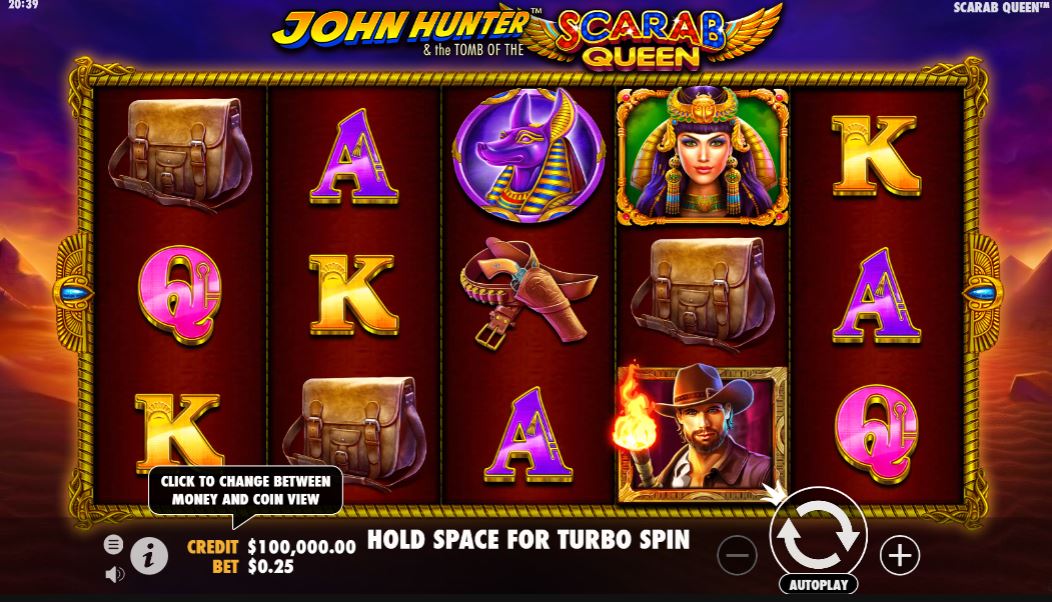
John Hunter And The SCARAB QUEENをプレイする方法
John Hunter And The SCARAB QUEENをプレイするには、まずはステーク(ベット額)を設定してから回転していく必要があります。画面右下でステークを設定することができ、ラインあたりのコイン、コインのバリュー、または合計ベットを介してステークを増減することが可能です。
あなたにプレイにあったステークを設定するようにしましょう。

オート機能を使うとコンスタントにプレイすることができるため時短でゲームを進めることができます。ステークも設定し準備ができたら、オートボタンをクリックするだけで選択されたステークのまま100回転の自動スピンが開始されます。
John Hunter And The SCARAB QUEENの特徴
- John Hunter And The SCARAB QUEENは一般的なレイアウトの5列3リールのスロットになっています。
- 1回転あたり$0.25から最大で$125までステークを設定することができるので、あなたにあったスタイルでプレイができる。
- John Hunter And The SCARAB QUEENで獲得できる最大配当は10,500倍です。
John Hunter And The SCARAB QUEENのRTP
RTPはペイアウト率の事でプレイヤーに還元される確率を表しています。オンラインカジノに限らずギャンブルをする人はより高いRTPを狙ってプレイすることが多いです。RTPが高い方がプレイヤーに帰ってくる資金が多く、RTPが低いほど負ける確率も高くなってしまいます。
John Hunter And The SCARAB QUEENのRTPは96.5%となっています。他のオンラインカジノスロットと比べてもRTPは高く設定されています。
John Hunter And The SCARAB QUEENのボーナス
John Hunter And The SCARAB QUEENはボーナスがいくつかあり、そのすべてで大事な配当を獲得することができます。通常時にスカラベシンボルを1~4のリール上に出現させ、5リール目にCOLLECTシンボルを停止させることで、スカラベシンボルに記載されている配当をすべて獲得することが可能です。
また、別にピラミッドシンボルを3つ停止させることでフリースピンボーナスにも突入します。このフリースピンこそがこのスロットの本命のボーナスです。8ゲーム間のフリースピンに突入し、こちらでも同様にスカラベシンボルが非常に大事になってきます。
John Hunter And The SCARAB QUEENのまとめ
Pragmatic Play社のJohn Hunter And The SCARAB QUEENには同じシリーズの他のスロットとは違うゲーム性があり、好きな部分が多くありました。RTPも比較的高い方でもあるので確実に勝ちに行けるチャンスはたしかにありますが、ボーナス機能に関しては少々残念な部分も見えたというのも事実ですね。